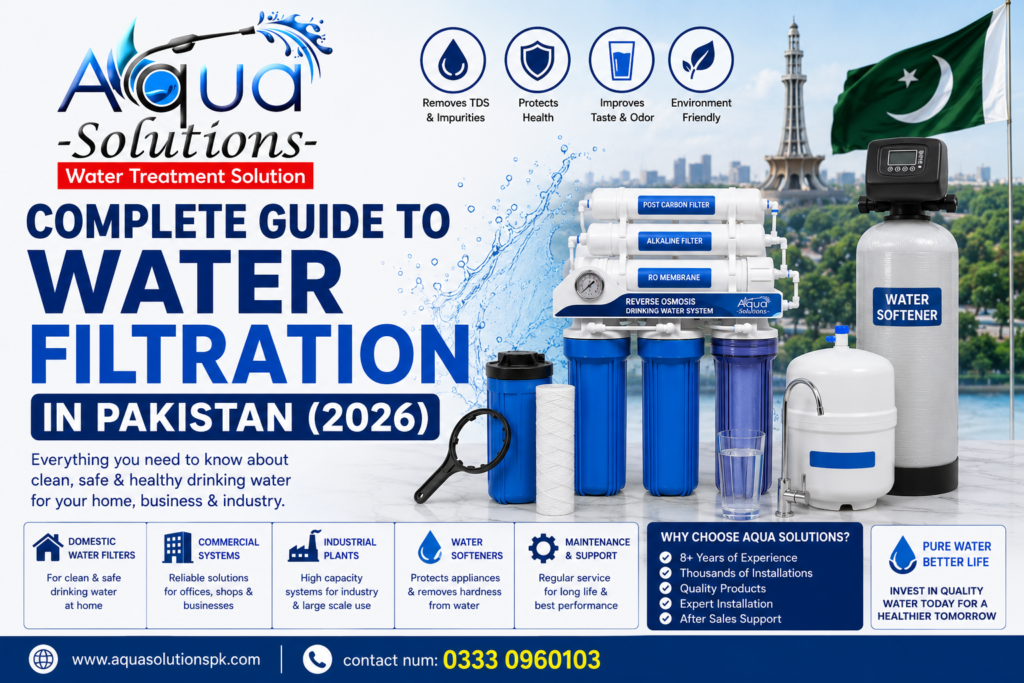
Complete Guide to Water Filtration in Pakistan (2026)
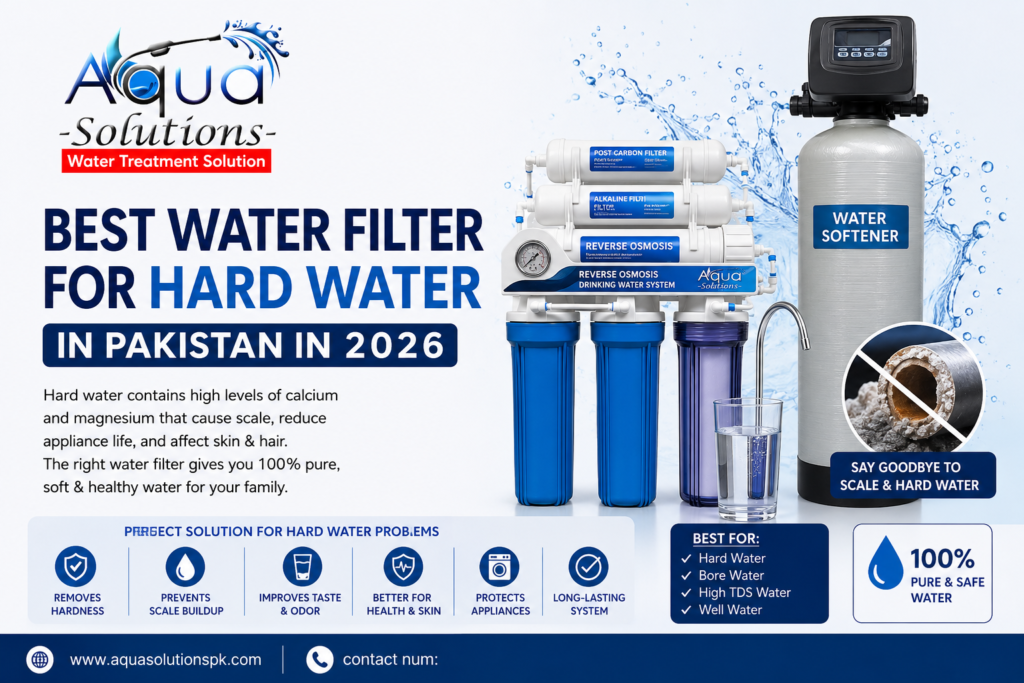
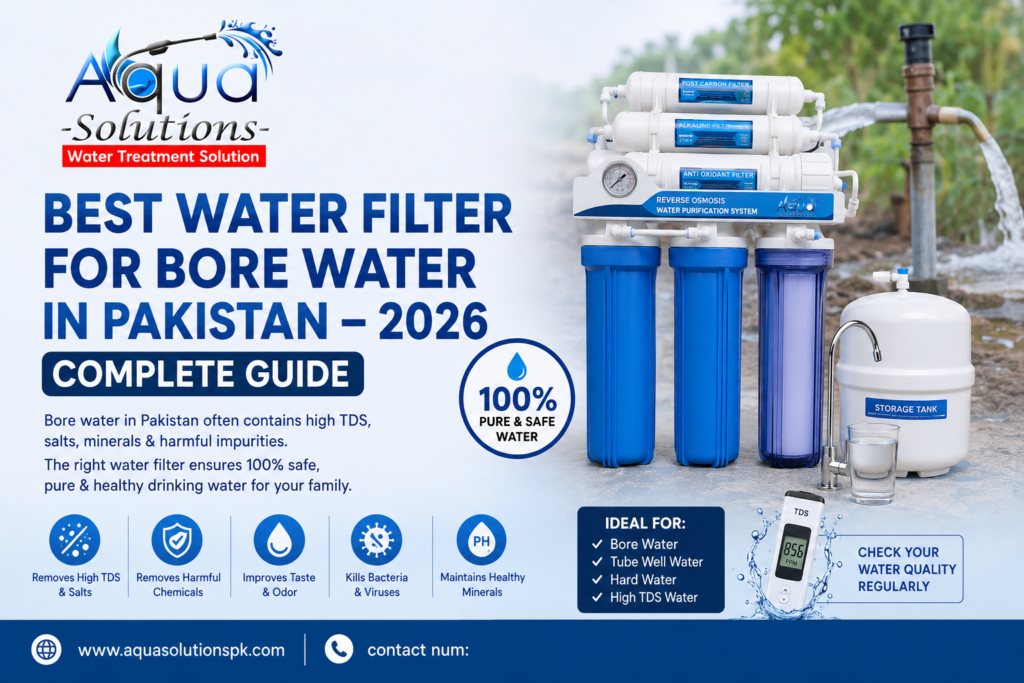
Everything You Need to Know About Clean, Safe Drinking Water in Pakistan Published: 2026 | By Aqua Solutions — Pakistan’s Most Trusted Water Purification Company Water is the foundation of life. Every single cell in your body depends on water to function properly. Yet in Pakistan in 2026, accessing clean, safe drinking water remains one of the biggest challenges facing millions of families. From the crowded streets of Rawalpindi to the rural villages of Sindh, from the industrial cities of Punjab to the coastal areas of Balochistan — contaminated water is a silent killer that affects every corner of this country. This complete guide to water filtration in Pakistan has been carefully written to give you real, accurate, and actionable information. We at Aqua Solutions believe that every Pakistani family deserves access to clean water, and knowledge is the first step toward achieving that goal. Ready to get clean water for your family right now? Contact Aqua Solutions immediately! 📞 Phone: 03465441319📱 WhatsApp: 03330960103🌐 Website: https://aquasolutionspk.com/ Table of Contents Chapter 1: The Water Crisis in Pakistan — The Real Picture in 2026 Let us start with the hard truth. Pakistan is facing one of the worst water crises in its history, and the situation continues to worsen in 2026. This is not exaggeration. These are real facts that affect real people every single day. The Numbers That Should Alarm Every Pakistani The water situation in Pakistan has reached critical levels. According to data from environmental research organizations and government reports: What is Actually in Your Water Right Now? This is the question that most Pakistanis never ask. They assume their water looks clear, so it must be safe. This is a deadly assumption. Let us break down what your water likely contains right now, depending on where you live in Pakistan: Heavy Metals:Arsenic, lead, chromium, cadmium, mercury, and iron are found in water supplies across Pakistan. These metals come from industrial discharge, mining activities, and old corroded pipes. Heavy metal contamination is particularly severe in Rawalpindi, Lahore, Gujranwala, Faisalabad, and Hyderabad. Biological Contaminants:Bacteria like E. coli, Salmonella, Vibrio cholerae (cholera), and parasites like Giardia and Cryptosporidium are commonly found in water supplies across Pakistan. These come from sewage contamination, which is rampant due to inadequate waste management systems. Chemical Contaminants:Pesticides and fertilizers used in agriculture seep into groundwater. Industrial chemicals from factories are discharged into rivers and groundwater. Chlorine and its byproducts are added to municipal water treatment but can themselves be harmful in large amounts. Physical Contaminants:Sand, silt, rust from old pipes, and sediment are commonly found in water across Pakistan. While these are less immediately dangerous, they damage appliances and indicate other potential contamination. Dissolved Salts and Minerals:High TDS (Total Dissolved Solids) is one of the most common water problems in Pakistan. In many areas, TDS levels are 3 to 10 times higher than WHO recommended limits. High TDS water causes kidney problems over time and makes water taste bitter. The Diseases Your Family Faces from Contaminated Water Typhoid Fever:Pakistan has some of the highest typhoid rates in the world. In 2026, antibiotic-resistant typhoid (XDR typhoid) continues to spread across Pakistan, particularly in Karachi, Hyderabad, and other major cities. This deadly strain is extremely difficult to treat. Hepatitis A and E:Both are waterborne diseases that cause severe liver inflammation. Pakistan has among the highest hepatitis rates in the world, largely due to contaminated water. Cholera:Caused by Vibrio cholerae bacteria in contaminated water. Outbreaks occur regularly across Pakistan, particularly after floods and in areas with inadequate sanitation. Gastroenteritis and Diarrhea:The most common waterborne illness in Pakistan. Children under five are most vulnerable, and diarrheal diseases remain a leading cause of childhood mortality in Pakistan. Kidney Disease:Long-term consumption of water with high TDS, heavy metals, and chemical contaminants leads to chronic kidney disease. Kidney failure rates in Pakistan are alarmingly high and are directly linked to water quality. Skin and Hair Problems:Hard water and chemically contaminated water cause dry skin, hair loss, eczema, and other skin conditions. The good news? All of these diseases are preventable with proper water filtration. Aqua Solutions has been helping Pakistani families protect themselves from these diseases with reliable, effective water filtration systems. Protect your family today. Call Aqua Solutions now! 📞 Phone: 03465441319📱 WhatsApp: 03330960103🌐 Website: https://aquasolutionspk.com/ Chapter 2: Understanding Water Contamination in Pakistan To choose the right water filtration solution, you need to understand where water contamination comes from and what types of contaminants are present in different areas of Pakistan. Sources of Water Contamination in Pakistan 1. Industrial Discharge Pakistan’s industrial sector — textiles, leather, chemicals, food processing — generates enormous amounts of wastewater. In 2026, despite increased environmental awareness, the majority of industrial units in Pakistan still discharge untreated or inadequately treated wastewater directly into rivers, streams, and groundwater. Major industrial areas like Faisalabad, Gujranwala, Lahore, Karachi, and Sialkot have severely contaminated groundwater due to decades of unchecked industrial discharge. Contaminants include heavy metals (chromium from tanneries, lead from battery manufacturing, cadmium from electroplating), toxic chemicals, and organic pollutants. 2. Agricultural Runoff Pakistan has one of the largest irrigation systems in the world. With irrigation comes heavy use of pesticides, herbicides, and fertilizers. These chemicals seep into groundwater and contaminate water supplies. Nitrates from fertilizers are particularly dangerous. In many agricultural areas of Pakistan, nitrate levels in groundwater exceed safe limits by 5 to 10 times. Nitrate contamination causes a condition called “blue baby syndrome” in infants and is linked to various cancers in adults. 3. Sewage and Sanitation Pakistan’s sewage treatment infrastructure is grossly inadequate. In most Pakistani cities and towns, raw or minimally treated sewage ends up in rivers, drains, and groundwater. The Ravi, Chenab, Jhelum, and Indus rivers — which supply water to millions — are severely contaminated with sewage. In Rawalpindi, Islamabad, Lahore, and Karachi, aging sewage infrastructure frequently leaks into water supply pipes, directly contaminating tap water with fecal bacteria. 4. Old and Corroded Water Infrastructure Pakistan’s water distribution infrastructure is old and deteriorating. Many
Complete Guide to Water Filtration in Pakistan (2026) Read More »