
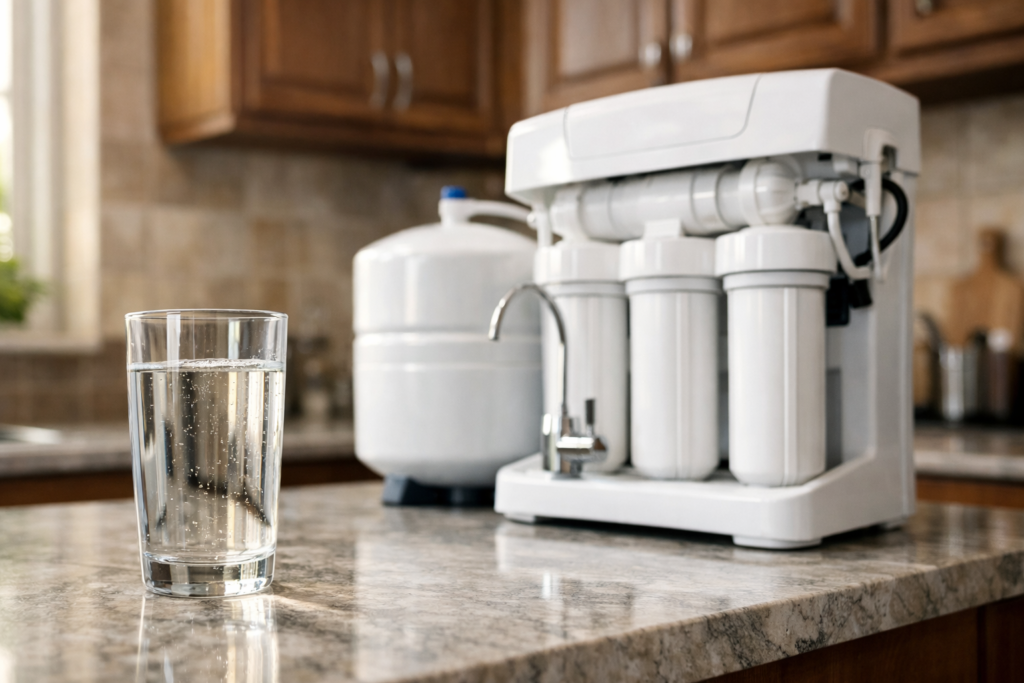
Here’s something that still surprises people: most tap water flowing into homes across Islamabad and Rawalpindi has a TDS reading well above what the WHO recommends for safe drinking. I’ve personally tested water in over 30 apartments and houses across the Twin Cities over the years, and the readings range from mildly concerning to genuinely alarming.
A good water filter isn’t a luxury in Pakistan. It’s one of the most practical purchases you can make for your family’s health. But picking the right one? That’s where things get confusing fast. Walk into any shop in Blue Area or browse Daraz for five minutes and you’ll find dozens of options, ranging from Rs. 3,000 pitcher filters all the way up to Rs. 80,000 RO systems. Some are brilliant. Some are overpriced junk. And a few are straight-up counterfeits.
I wrote this guide to cut through all that noise. You’ll find a breakdown of every filter type that actually makes sense for Pakistani water, my honest picks across different budgets (with current PKR pricing), and a section specifically about where and how to buy if you’re in Islamabad or Rawalpindi. Whether your water comes from CDA supply, a private boring, or a tanker, there’s a filter here that fits.
Let’s get into it.
Why Clean Drinking Water Is Still a Real Problem in Pakistan
Pakistan ranks among the countries with the highest rates of waterborne diseases, and it’s not hard to see why. Municipal water treatment infrastructure in most cities, including Islamabad, hasn’t kept pace with population growth. Rawalpindi’s situation is arguably worse; large parts of the city rely on aging pipelines that mix sewage and freshwater lines during monsoon flooding.
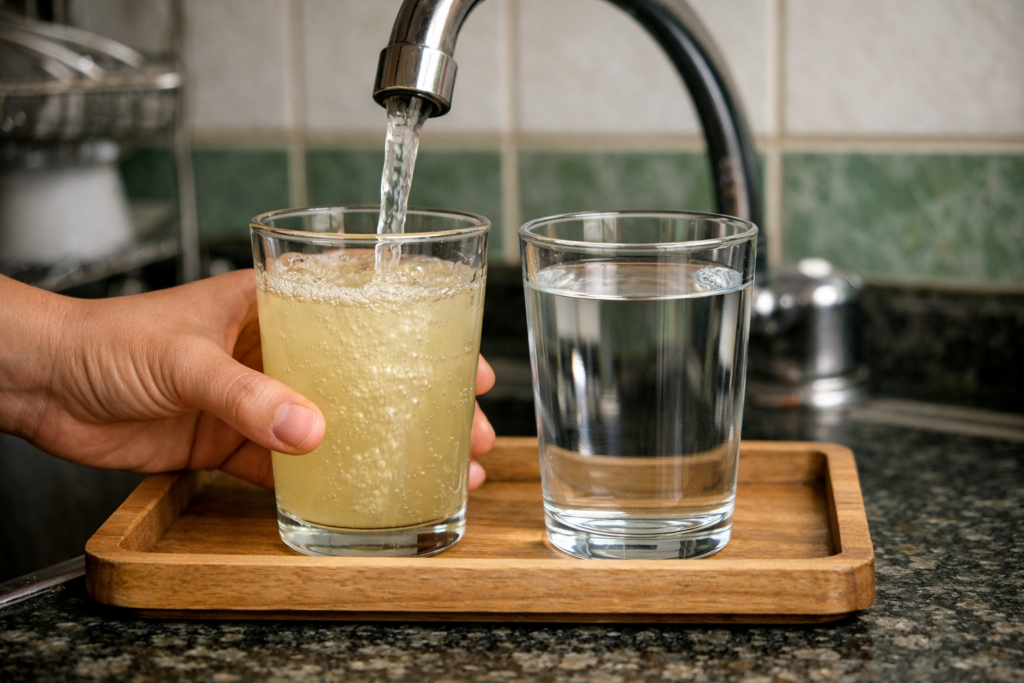
Here’s what that means in practical terms. If you fill a glass of tap water in most areas of the Twin Cities and test it with a simple TDS meter (you can grab one for Rs. 500-1,500 on Daraz), you’ll often see readings between 300 and 900 ppm. The WHO’s recommended upper limit for safe drinking water is 300 ppm. Some Rawalpindi neighborhoods I’ve tested, particularly around satellite towns and older cantonment areas, show readings above 1,200 ppm.
📊 According to the Pakistan Council of Research in Water Resources (PCRWR), nearly 80% of water sources tested across Pakistan are unsafe for human consumption.
Boiling water kills bacteria, sure. But it won’t remove dissolved solids, heavy metals, pesticide traces, or the chlorine that CDA adds to the supply. That’s why a proper filtration system matters.
If your family drinks 10-15 liters of water daily (typical for a household of 4-5 in Pakistan), an effective filter isn’t just protecting you from upset stomachs. It’s guarding against long-term exposure to contaminants that accumulate over years.
Water Filter Types Explained: Which One Actually Works for Pakistani Water?
Before spending a single rupee, you need to understand what each filter type does and, more importantly, what it can’t do. This is where most people go wrong. They buy based on price or brand name without matching the filter to their actual water quality.
RO (Reverse Osmosis) Filters
This is the gold standard for areas with high TDS. An RO system pushes water through a semi-permeable membrane that removes up to 99% of dissolved solids, heavy metals, and contaminants. If your water TDS is above 500 ppm (common in most of Rawalpindi and many Islamabad sectors), RO is usually your best bet.
The downside? RO systems waste water. For every liter of purified water, they typically reject 2-3 liters. They also need electricity to operate, which brings load-shedding into the conversation. Decent models come with a storage tank that holds 8-12 liters, so you’re covered during power cuts, but it’s worth knowing.
Price range in Pakistan: Rs. 25,000 to Rs. 80,000 depending on brand and GPD capacity.
UV (Ultraviolet) Filters
UV filters use ultraviolet light to kill bacteria, viruses, and other microorganisms. They’re excellent at disinfection but they don’t remove dissolved solids. So if your water’s TDS is already low (under 300 ppm) and your concern is mainly biological contamination, UV can be a smart, affordable choice.
They need electricity too, but consume far less than RO systems.
Price range in Pakistan: Rs. 12,000 to Rs. 35,000.
UF (Ultrafiltration) Filters
Think of UF as a middle ground. These filters use a membrane (like RO) but with larger pores. They remove bacteria and some larger contaminants but don’t significantly reduce TDS. Good for municipal water that’s been chlorinated but still carries biological risks.
Big advantage: many UF systems work without electricity.
Price range in Pakistan: Rs. 8,000 to Rs. 22,000.
Gravity-Based Filters
Simple, affordable, no electricity needed. Water passes through activated carbon and sometimes ceramic cartridges using gravity alone. They improve taste, remove chlorine, and catch sediment. For Islamabad CDA water that’s reasonably clean but tastes off, these can be perfectly adequate.
They won’t touch high TDS, though. If you’re on boring water with a TDS above 500, a gravity filter alone won’t solve your problem.
Price range in Pakistan: Rs. 4,000 to Rs. 15,000.
Filter Pitchers
The most budget-friendly entry point. Brands like Brita and Zero Water are available in Pakistan (though often at premium imported prices). Local alternatives exist on Daraz for Rs. 2,000-6,000. They’re fine for one or two people, but for a family of five drinking 12+ liters daily, they become impractical. You’ll be refilling constantly and replacing cartridges every few weeks.
💡 Expert Tip: Before you buy any filter, spend Rs. 800 on a TDS meter from Daraz. Test your water first. If your reading is under 300 ppm, you probably don’t need an RO system and can save Rs. 30,000+ by going with a UV or UF setup instead.
[INTERNAL PRODUCT LINK: Water filter category page]
Top 7 Water Filters for Pakistani Homes in 2026
I’ve picked these based on a combination of real performance, after-sales reliability in the Pakistani market, parts availability, and value for money in PKR. No filter on this list is here because of brand deals. These are genuine editorial picks.
1. PureIt Ultima RO + UV + MF
PureIt (by Unilever) has the strongest local distribution network of any water purifier brand in Pakistan. The Ultima model combines RO, UV, and micro-filtration in a single unit. It handles TDS up to 2,000 ppm, which covers even the worst boring water in Rawalpindi.
What I genuinely appreciate about this one is the “Germ Kill Kit” indicator that tells you when the filter needs replacement. No guessing. Parts are readily available on Daraz and through authorized dealers in Islamabad.
Price: Around Rs. 45,000-55,000 (roughly $155-190 USD)
Best for: Families on high-TDS boring water who want reliable after-sales support
Local availability: Unilever authorized dealers, Daraz (verified sellers), electronics shops in Blue Area and Jinnah Super
Honest limitation: The RO membrane replacement costs Rs. 4,000-6,000, and you’ll need one roughly every 12-18 months
[INTERNAL PRODUCT LINK: PureIt water purifiers]
2. Kent Grand Plus
Kent is an Indian brand that’s made significant inroads in Pakistan. The Grand Plus uses a double purification process (RO + UV + UF) and has a mineral retention feature called MTDS that adds back essential minerals stripped during RO purification. Storage tank holds 8 liters.
It’s well-built and the filtration is genuinely excellent. The challenge in Pakistan? Official Kent service centers are limited. If you’re in Islamabad, you’ll find authorized resellers, but warranty claims can be slow.
Price: Around Rs. 50,000-65,000 (roughly $170-225 USD)
Best for: Buyers who want top-tier filtration and don’t mind managing after-sales independently
Local availability: Select electronics retailers in Islamabad, Daraz (be careful with unauthorized sellers), some plumbing specialty shops
Honest limitation: Replacement parts are pricier than PureIt and sometimes need to be sourced online
[INTERNAL PRODUCT LINK: Kent water filters]
3. Aquafresh RO Systems (Pakistani Assembled)
This is the value pick. Aquafresh and similar locally assembled RO systems are everywhere in Pakistan. You’ll find them in the I-8/I-9 industrial area shops in Islamabad, all over Rawalpindi’s Committee Chowk, and scattered across Daraz.
Honestly, the build quality varies a lot. The best ones use imported RO membranes (often Filmtec or CSM) housed in locally assembled units. At Rs. 15,000-25,000, they offer surprisingly good filtration for the price.
The trade-off? Aesthetics are basic, plastic quality is average, and there’s no brand support. But the membranes and cartridges are universal and dirt cheap locally.
Price: Around Rs. 15,000-28,000 (roughly $50-95 USD)
Best for: Budget-conscious families who want RO filtration and are comfortable with basic maintenance
Local availability: Widely available in local markets across Islamabad and Rawalpindi, Daraz, WhatsApp-based local water treatment shops
Honest limitation: Quality control varies between assemblers. Ask to see the membrane brand before buying.
📍 Local Insight: In Islamabad, some of the best deals on locally assembled RO units are in the I-9 industrial area and G-9 Markaz. These shops often include free installation and 3-6 months of free cartridge replacement. Always negotiate; the first price they quote is rarely the final one.
[INTERNAL PRODUCT LINK: Budget RO water filters]
4. 3M AP Easy Complete Water Filter System
If your water TDS is already reasonable (under 350 ppm) and your main concern is taste, chlorine, sediment, and basic contaminants, the 3M system is a premium under-sink option. It doesn’t use RO, so there’s zero water waste. Installation is clean and the filter quality is genuinely top-tier.
It’s imported, and the price reflects that. But the cartridge lasts 12 months for a typical family, which balances the higher upfront cost.
Price: Around Rs. 18,000-25,000 for the system, Rs. 6,000-8,000 per replacement cartridge (roughly $60-85 USD system, $20-27 USD cartridge)
Best for: Islamabad apartments with CDA supply where TDS is below 350 ppm
Local availability: Limited to specialty stores and online import sellers on Daraz
Honest limitation: Not suitable for high-TDS water. Won’t help if your boring water reads 800+ ppm.
[INTERNAL PRODUCT LINK: 3M water filtration products]
5. PureIt Classic Gravity-Based
For families on a tight budget, this is my go-to recommendation. No electricity needed, no installation costs, no plumber. You pour water in the top, it filters through activated carbon and micro-fiber mesh, and clean water collects in the bottom chamber.
It won’t tackle high TDS. But for CDA-supplied areas of Islamabad where the water is chlorinated and reasonably clean, it does a solid job of improving taste and removing sediment and basic contaminants.
Price: Around Rs. 5,500-8,000 (roughly $19-27 USD)
Best for: Renters, students, single-person households, families with clean municipal supply
Local availability: Widely available on Daraz, Unilever authorized shops, most electronics stores in Islamabad and Rawalpindi
Honest limitation: Slow filtration speed. Not suitable for boring water or areas with known contamination.
[INTERNAL PRODUCT LINK: Gravity-based water filters]
6. Livpure Glo Star RO + UV + Mineralizer
Livpure has been growing in the Pakistani market over the past two years. The Glo Star offers 7-stage purification with a mineral cartridge that re-adds calcium and magnesium after RO stripping. The 7-liter tank is slightly small for large families but fine for 3-4 people.
Build quality feels a step above the locally assembled units but below Kent. The price positioning is competitive.
Price: Around Rs. 35,000-45,000 (roughly $120-155 USD)
Best for: Mid-budget families wanting branded RO with mineral retention
Local availability: Daraz, select retailers in Islamabad
Honest limitation: After-sales network in Pakistan is still developing. Keep the seller’s WhatsApp number handy.
7. Ecosoft Standard RO System (6-Stage)
A solid mid-range RO option from a Ukrainian brand that’s found a niche in Pakistan. Six filtration stages, 50 GPD capacity, 5-liter pressurized tank. The build quality is noticeably better than most locally assembled units, and replacement filters are available on Daraz.
Price: Around Rs. 22,000-32,000 (roughly $75-110 USD)
Best for: Families wanting reliable RO at a moderate price point
Local availability: Daraz (limited sellers), some water treatment shops in Islamabad
Honest limitation: Less brand recognition means fewer local technicians know how to service it. Installation support varies.
Side-by-Side Comparison: Which Filter Wins?
| Feature | PureIt Ultima | Kent Grand Plus | Aquafresh Local RO | 3M Easy Complete | PureIt Classic | Livpure Glo Star | Ecosoft Standard |
|---|---|---|---|---|---|---|---|
| Filter Type | RO + UV + MF | RO + UV + UF | RO (5-7 stage) | Carbon + UF | Gravity | RO + UV + Mineral | RO (6-stage) |
| Price (PKR) | Rs. 45,000-55,000 | Rs. 50,000-65,000 | Rs. 15,000-28,000 | Rs. 18,000-25,000 | Rs. 5,500-8,000 | Rs. 35,000-45,000 | Rs. 22,000-32,000 |
| Price (USD approx.) | $155-190 | $170-225 | $50-95 | $60-85 | $19-27 | $120-155 | $75-110 |
| Handles High TDS | Yes (up to 2,000 ppm) | Yes (up to 2,000 ppm) | Yes (depends on membrane) | No (under 350 ppm only) | No | Yes (up to 2,000 ppm) | Yes (up to 1,500 ppm) |
| Needs Electricity | Yes | Yes | Yes | No | No | Yes | Yes |
| Storage Tank | 9L | 8L | 8-12L | None (inline) | 5L (gravity) | 7L | 5L |
| Local After-Sales | Strong (Unilever network) | Limited | Varies by seller | Minimal | Strong | Developing | Limited |
| Daraz Availability | Yes (verified) | Yes (check seller) | Yes (many sellers) | Limited | Yes | Yes | Limited |
| Our Verdict | Best overall for high-TDS | Premium choice | Best budget RO | Best for low-TDS areas | Best under Rs. 10,000 | Strong mid-range | Reliable mid-range |
How to Pick the Right Filter for YOUR Water
Don’t buy based on brand hype or a shopkeeper’s recommendation alone. Here’s a simple decision framework I’ve seen work for hundreds of Pakistani families.
Step 1: Test your water TDS. Spend Rs. 800 on a TDS meter. Dip it in your tap or boring water. Write down the number.
Step 2: Match your TDS to a filter type.
| Your TDS Reading | Recommended Filter Type | Budget Range (PKR) |
|---|---|---|
| Under 200 ppm | Gravity-based or carbon filter | Rs. 4,000-15,000 |
| 200-500 ppm | UV or UF filter | Rs. 8,000-30,000 |
| 500-1,500 ppm | RO system (ideally RO + UV combo) | Rs. 20,000-60,000 |
| Above 1,500 ppm | Heavy-duty RO with pre-filtration | Rs. 35,000-80,000+ |
Step 3: Consider your family size. A family of 5-6 needs at least 15 liters of purified water daily. Make sure your filter’s daily capacity (measured in GPD) matches. Most household RO systems produce 50-75 GPD, which is 190-285 liters per day. That’s more than enough.
Step 4: Check electricity reality. If your area faces frequent load-shedding (still common in parts of Rawalpindi and Islamabad’s outskirts), either choose a non-electric filter or make sure the RO system has an adequate storage tank. Some families pair an RO system with a UPS; it works, but it’s an additional cost to factor in.
Step 5: Factor in ongoing costs. The purchase price is just the beginning. Budget Rs. 3,000-8,000 annually for cartridge and membrane replacements, depending on your filter type and water quality. Dirtier source water means faster filter wear.
Picture this: you buy a Rs. 50,000 Kent system, feel great about it, and then realize six months later that the replacement membrane alone costs Rs. 6,000 and needs to be ordered from Lahore because nobody stocks it locally. That’s a frustration you can avoid by checking parts availability before you buy.
[INTERNAL PRODUCT LINK: Water filter replacement cartridges and accessories]
Buying a Water Filter in Islamabad and Rawalpindi: Your Complete Local Guide
This is the section that no imported buying guide will ever give you. If you’re in the Twin Cities, here’s exactly where to go and what to expect.
Physical Shops in Islamabad:
The best concentration of water filter dealers is in G-9 Markaz and the I-8/I-9 industrial area. These shops sell both branded and locally assembled systems. You can often negotiate 10-15% off the sticker price, and many include free installation.
Blue Area and Jinnah Super have electronics stores that stock PureIt and some Kent models. Pricing here tends to be slightly higher than the industrial area shops but the buying experience is smoother.
Centaurus Mall and Giga Mall occasionally have brand kiosks during promotional events, especially around summer and Eid sales.
Physical Shops in Rawalpindi:
Saddar and Raja Bazaar are your best bets. The plumbing and hardware shops along Murree Road near Committee Chowk stock locally assembled RO systems at competitive prices. Again, negotiate. The first price is never the final price here.
Online on Daraz.pk:
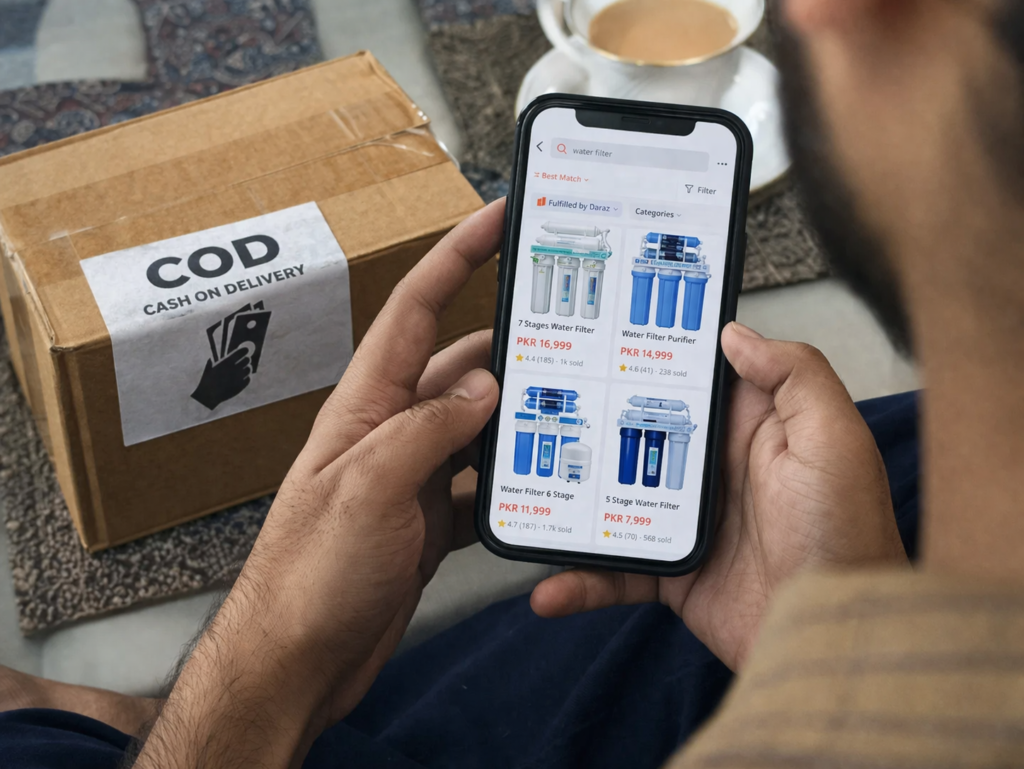
Daraz is convenient, and COD is available on most water filters. But here’s my honest advice: always check the seller’s rating and reviews before ordering. The water filter category on Daraz has a counterfeit problem, especially with replacement cartridges. Look for sellers with 85%+ positive ratings and at least 100 orders. Avoid sellers with no reviews.
WhatsApp Ordering:
Many local water treatment shops in Islamabad now take orders through WhatsApp. They’ll often send a technician to test your water first, recommend a system, deliver, and install for a bundled price. This is honestly one of the most convenient options for people in Islamabad and Rawalpindi. Ask for the shop’s WhatsApp number when you visit, or search local Facebook groups for recommendations.
COD (Cash on Delivery):
Available from most Daraz sellers and all local shops. For expensive systems (Rs. 40,000+), some shops offer 2-3 installments. Ask about it; not every shop advertises this.
If you’re reading from outside Pakistan, the core principles still apply wherever you are: test your water first, match your filter to your TDS, and always check after-sales support before committing.
[INTERNAL PRODUCT LINK: Store page with local delivery and COD options]
5 Mistakes That Cost Pakistani Buyers Money
From what I’ve seen over years of covering this space, these are the errors that keep coming up again and again.
Mistake 1: Buying RO when you don’t need it.
If your TDS is under 300 ppm, you’re spending Rs. 30,000+ on RO filtration that’s removing minerals you actually need. A UV or gravity filter would serve you better and cost a fraction of the price.
Mistake 2: Ignoring the maintenance schedule.
Every water filter has consumable parts that need periodic replacement. Skipping cartridge changes doesn’t save you money; it turns your filter into an expensive decoration. An overused cartridge can actually make your water worse by releasing trapped contaminants back into the flow.
Mistake 3: Buying unbranded replacement cartridges from Daraz.
This is a real issue. Counterfeit cartridges that look identical to genuine ones but use cheap, ineffective filter media are all over Daraz. Stick to verified sellers or buy directly from authorized distributors.
Mistake 4: Not checking voltage compatibility.
Electronic filters (RO and UV) need stable electricity. If your area has voltage fluctuation issues, and let’s be honest, that’s half of Rawalpindi, a voltage stabilizer (Rs. 2,000-5,000) is a worthwhile addition. Without one, you risk burning out the pump motor.
Mistake 5: Assuming all “imported” filters are better.
Some sellers on Daraz market Chinese-assembled units as “imported” premium products at inflated prices. A locally assembled RO unit with a genuine Filmtec membrane can outperform a random Chinese import that costs twice as much. Brand of the membrane matters more than brand of the housing.
[INTERNAL PRODUCT LINK: Genuine replacement cartridges and voltage stabilizers]
Best Water Filter in Pakistan 2026 — Complete Buying Guide
Frequently Asked Questions About Water Filters in Pakistan
Which water filter is best for home use in Pakistan?
For most Pakistani homes, an RO + UV combo system offers the most complete protection. PureIt Ultima and Kent Grand Plus are the strongest branded options. For budget buyers, locally assembled RO systems from Islamabad’s I-9 area or Daraz offer good filtration starting from Rs. 15,000.
How much does a water filter cost in Pakistan in 2026?
Prices range from Rs. 3,000 for basic pitcher filters to Rs. 80,000+ for premium RO systems. The sweet spot for most families is Rs. 20,000-50,000 for a quality RO system. Budget gravity filters start around Rs. 5,000-8,000.
Is tap water safe to drink in Islamabad?
CDA-supplied water in Islamabad is chlorinated but not always safe for direct consumption. TDS readings vary by sector, typically ranging from 200-600 ppm. Some sectors have cleaner water than others, but a basic filtration system is recommended for all Islamabad residents as a precaution.
Is tap water safe to drink in Rawalpindi?
Rawalpindi’s water quality is generally worse than Islamabad’s. Many areas rely on aging infrastructure, and TDS readings frequently exceed 500 ppm, sometimes going above 1,000 ppm in older neighborhoods and satellite towns. An RO system is strongly advisable for most Rawalpindi households.
What is a safe TDS level for drinking water?
The WHO suggests that water with TDS under 300 ppm is generally acceptable for drinking. Under 500 ppm is considered tolerable. Above 900 ppm, water is classified as poor quality. Above 1,200 ppm, it’s unsuitable without treatment.
Is RO water filter worth the investment in Pakistan?
Yes, if your source water TDS is above 500 ppm. For areas with cleaner municipal supply (under 300 ppm), a UV or gravity filter may be sufficient and more cost-effective. Test your water first before deciding.
What’s the difference between RO and UV water filters?
RO removes dissolved solids, heavy metals, and contaminants by pushing water through a membrane. UV kills bacteria and viruses using ultraviolet light but doesn’t remove dissolved solids. RO is essential for high-TDS water; UV is sufficient for biologically contaminated but low-TDS water.
How often should I change my water filter cartridge?
Sediment and carbon pre-filters need replacement every 3-6 months. RO membranes last 12-24 months. UV bulbs need annual replacement. The exact schedule depends on your source water quality. Dirtier water means more frequent changes.
Where can I buy a water filter in Islamabad?
G-9 Markaz and I-8/I-9 industrial area have the most water filter shops. Blue Area and Jinnah Super stock branded options. Daraz.pk has the widest selection online with COD available. Centaurus and Giga Mall occasionally stock filters during sales events.
Where can I buy a water filter in Rawalpindi?
Saddar, Raja Bazaar, and Committee Chowk area are your best options for physical shops. Plumbing and hardware stores along Murree Road stock locally assembled RO systems at competitive prices.
Can I install a water filter myself in Pakistan?
Gravity-based and pitcher filters need zero installation. Under-sink carbon filters are a moderate DIY job. Full RO systems typically need a plumber for proper installation, including drain line connection and water line tapping. Local plumber charges for water filter installation run Rs. 1,500-3,500 in Islamabad.
Is a water filter available with cash on delivery on Daraz?
Yes. Most water filter sellers on Daraz offer COD. Check the product listing for the COD badge. For expensive systems, confirm COD availability before ordering, as some sellers disable it for high-value items.
Does an RO water filter work during load-shedding?
Not while the power is out, since the RO pump needs electricity. However, purified water stored in the system’s built-in tank (typically 5-12 liters) remains available. If your area faces long outages, prioritize a model with a larger storage tank or consider pairing with a UPS.
How much electricity does an RO water filter consume?
A standard household RO system uses a pump rated at 24-36 watts. Actual electricity cost is minimal: roughly Rs. 50-100 per month for a typical family’s water usage. It’s comparable to running a small LED bulb.
Can a water filter remove arsenic from water?
RO systems effectively remove arsenic, which is a concern in some parts of Punjab and Sindh. UV and gravity filters do not remove arsenic. If arsenic contamination is a known issue in your area, RO is the only household-level solution.
Do I need a water filter if I already boil my water?
Boiling kills bacteria and viruses effectively. But it doesn’t remove dissolved solids, heavy metals, pesticide residues, or chlorine. If your concern is purely biological contamination and your TDS is low, boiling may be sufficient. For comprehensive purification, a filter is the better long-term solution.
The Right Filter Changes Everything
Three things to take away from all of this. First, always test your water before buying a filter. A Rs. 800 TDS meter can save you from wasting Rs. 30,000 on the wrong system. Second, match the filter type to your actual water quality; RO for high TDS, UV or gravity for cleaner supply. Third, buy from a source with genuine after-sales support, whether that’s a local Islamabad shop with a WhatsApp number or a verified seller on Daraz.
If I had to pick one recommendation for the average Pakistani household in 2026, it would be the PureIt Ultima for families on high-TDS boring water, or the PureIt Classic gravity filter for homes with cleaner CDA supply. Both have strong local support networks, readily available parts, and pricing that makes sense in the Pakistani market.
Clean water isn’t something you think about until you don’t have it. And frankly, the cost of a good filter is a fraction of what a family spends on doctor visits from waterborne illnesses over a year. That’s not a sales pitch; it’s just math.
Found this useful? Share it with your family WhatsApp group. Someone in there is probably dealing with the same water quality worries you were ten minutes ago. Complete water filter collection How to Test Your Water Quality at Home in Pakistan