
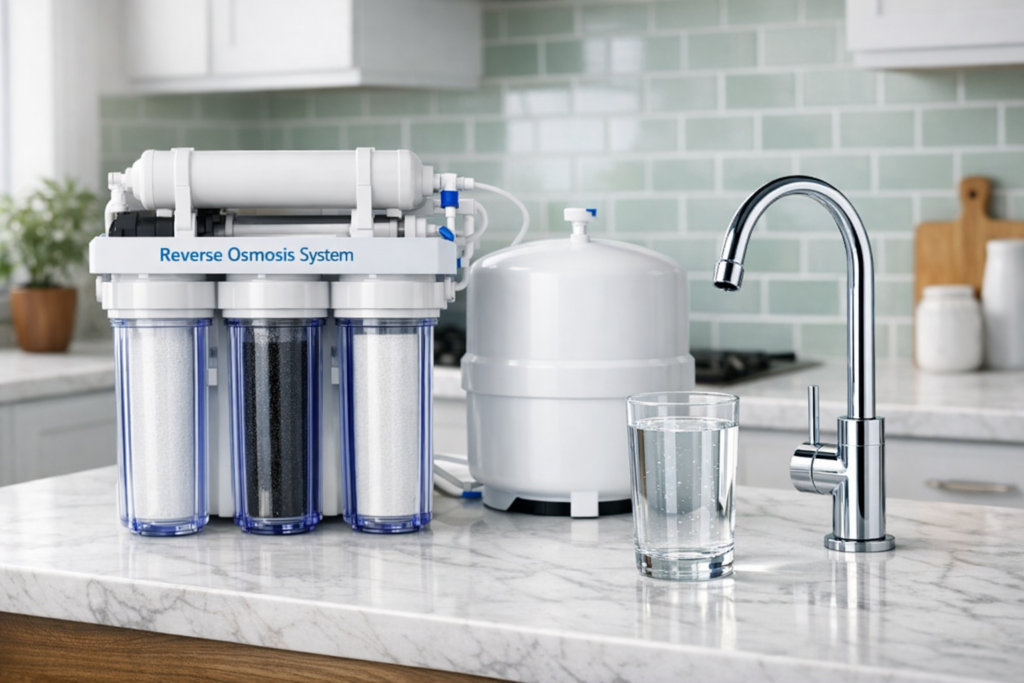
Best Water Filter in Pakistan 2026 — Your Complete Guide to Clean Drinking Water
Picture this. You fill a glass from your kitchen tap in Islamabad, and the water has that slightly off smell. Maybe it looks clear, maybe it doesn’t. Your kids drink it, you use it for cooking chai, and somewhere in the back of your mind, you’re wondering if this water is actually safe.
You’re not alone. According to the Pakistan Council of Research in Water Resources (PCRWR), nearly 80% of water sources across major Pakistani cities fail to meet WHO drinking water standards. That’s not a small number. I’ve tested water in homes across Rawalpindi, Lahore, and Karachi, and honestly, the results are often worse than people expect.
So what’s the solution? A good water filter. But here’s where most people get stuck. Walk into any market or browse online, and you’ll find dozens of options. 3-stage, 5-stage, 7-stage, RO, UV, carbon filters. The jargon alone is enough to make your head spin. And prices? They range from PKR 8,000 to over PKR 100,000. How do you know what’s actually worth your money?
That’s exactly what this guide will help you figure out. I’ve spent years working with water filtration systems in Pakistan, and I’m going to break down everything you need to know to pick the best water filter for your home in 2026, without overspending or buying something that doesn’t actually solve your water problem.
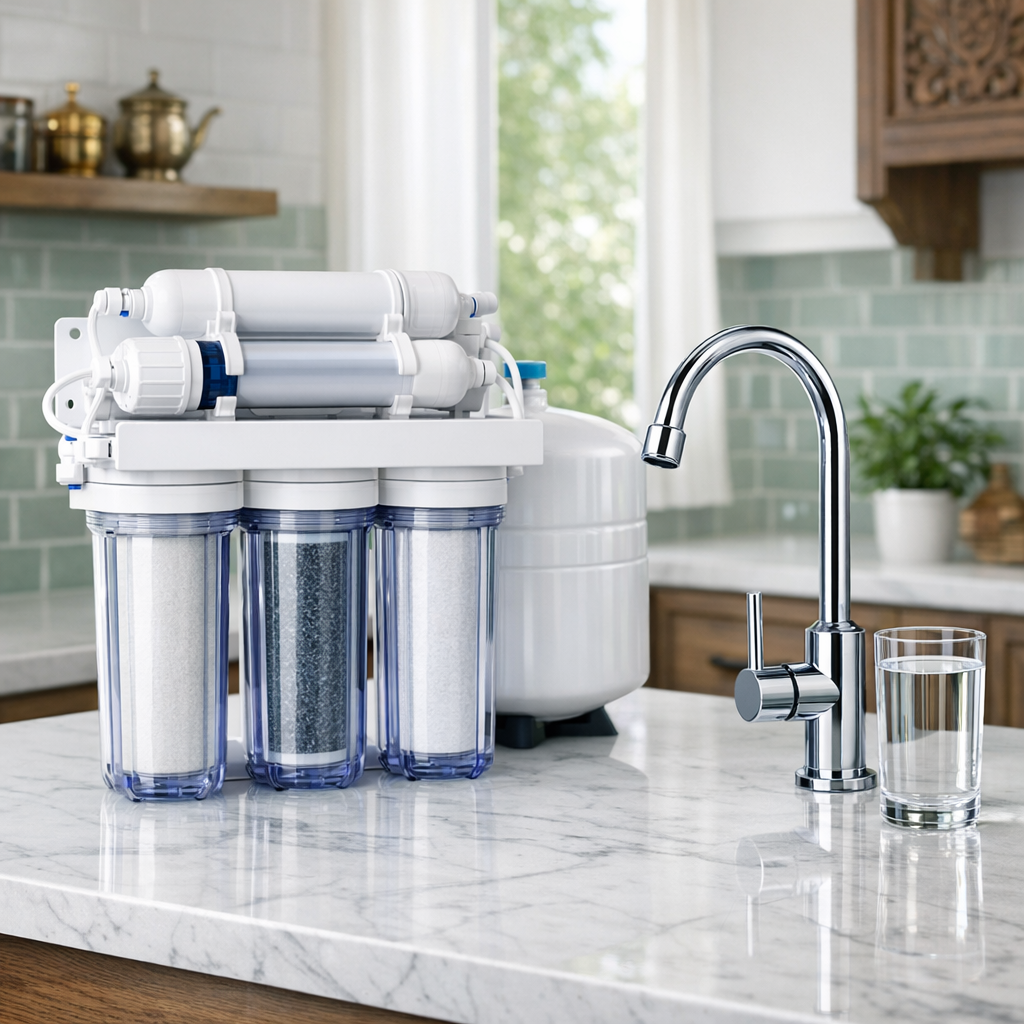
What Exactly Does a Water Filter Do?
Let’s start with the basics because I’ve met plenty of smart people who don’t fully understand what a water filter actually removes from their water.
A water filter is essentially a purification system that removes unwanted stuff from your tap water. Think of it like a very fine chalni (strainer), but instead of just catching big particles, it filters out things you can’t even see: bacteria, viruses, dissolved salts, heavy metals like lead and arsenic, chlorine, and sediment.
Why This Matters for Pakistani Homes
Here’s what most people don’t realize about water in Pakistan. Even if your WASA supply looks clean, it often travels through old, corroded pipes before reaching your tap. Along the way, it picks up rust, bacteria, and contaminants. Borewell water is even trickier because it often has high TDS (Total Dissolved Solids), sometimes reaching 1,200 PPM or higher in areas like parts of Rawalpindi and southern Punjab.
The World Health Organization recommends drinking water should have TDS below 300 PPM. I’ve tested homes in Bahria Town where the borewell TDS was over 900. The families had no idea until their children started having recurring stomach issues.
Did You Know? A 2023 PCRWR study found that 44% of water samples from Islamabad contained bacterial contamination exceeding safe limits. This is water that looks perfectly clear.
Types of Water Filters Available in Pakistan
Alright, let’s get into the different types of water filters you’ll find in the Pakistani market. Each type works differently, and honestly, not everyone needs the most expensive option.
Quick Comparison Table
| Feature | 3-Stage Filter | 5-Stage RO | 7-Stage RO | UV Filter | Water Softener |
|---|---|---|---|---|---|
| Filtration Method | Sediment + Carbon | RO Membrane + Carbon | RO + Mineral + Alkaline | UV Light | Ion Exchange |
| TDS Removal | No | Yes (up to 95%) | Yes (up to 98%) | No | No (removes hardness) |
| Bacteria Removal | Partial | Yes | Yes | Yes | No |
| Price Range (PKR) | 8,000 – 15,000 | 22,000 – 45,000 | 35,000 – 70,000 | 15,000 – 30,000 | 45,000 – 150,000 |
| Best For | Low TDS municipal water | High TDS borewell water | Those wanting mineral-enriched RO water | Bacteria concerns with acceptable TDS | Hard water causing scale buildup |
| Electricity Needed | No | Yes | Yes | Yes | No (most models) |
| Our Recommendation | Budget homes with clean source | Most Pakistani homes | Premium choice | Add-on with other filters | Homes with very hard water |
Note: Prices are approximate and may vary based on brand, specifications, and market conditions.
3-Stage Water Filter
This is your entry-level option. A 3-stage water filter typically includes a sediment filter, a pre-carbon filter, and a post-carbon filter. It removes chlorine, improves taste, and catches larger particles.
But here’s the catch. It doesn’t remove TDS. If your water source has high dissolved salts (common in borewell water), a 3-stage filter won’t solve that problem. It’s ideal for homes getting relatively clean municipal water with TDS already below 300.
5-Stage RO Water Filter
This is what I recommend for most families in Pakistan. A 5-stage water filter adds a reverse osmosis membrane, which is the real workhorse for removing dissolved contaminants. The RO membrane pushes water through tiny pores that block salts, heavy metals, bacteria, and viruses.
From what I’ve seen working in this industry, a quality 5-stage RO system handles about 90% of the water problems Pakistani families face. It’s the sweet spot between price and performance.
7-Stage RO Water Filter
The 7-stage system adds mineral cartridges and sometimes alkaline filters to put back healthy minerals after RO purification. Some people prefer this because pure RO water can taste slightly flat.
Is it necessary? Frankly, for most families, a 5-stage works fine. But if you want that extra mineral taste and have the budget, the 7-stage is a solid upgrade.
UV Water Filter
UV filters use ultraviolet light to kill bacteria and viruses. They’re excellent at disinfection but don’t remove dissolved solids. Many people use UV as an add-on stage with their RO system for extra protection.
One thing to keep in mind: UV filters need electricity to work. During load shedding (a reality in many Pakistani cities), your UV stage won’t function unless you have backup power.
Water Softener
A water softener is different from water filters. It specifically targets hard water by removing calcium and magnesium that cause scale buildup. If your geyser keeps getting damaged, your shower heads clog with white residue, or your clothes feel rough after washing, you likely have hard water.
Water softeners don’t make water drinkable on their own. They solve hardness problems and protect your appliances.
Benefits of Installing a Water Filter at Home
Let me break down why investing in a water filter makes sense for Pakistani households. And I’ll give you real numbers, not vague promises.
Health Benefits
Clean drinking water reduces your family’s exposure to waterborne diseases. Typhoid, cholera, hepatitis A, and chronic stomach infections are common in Pakistan, and contaminated water is a major cause. Studies suggest that proper water filtration can reduce the risk of gastrointestinal illnesses significantly.
RO systems remove heavy metals like arsenic and lead, which are present in groundwater across several Pakistani regions. Long-term exposure to these metals has been linked to serious health issues, according to WHO guidelines.
Financial Benefits
Here’s a calculation I share with almost every client:
A family of five in Islamabad spending PKR 100 per day on bottled water spends PKR 3,000 monthly. That’s PKR 36,000 per year. Over five years, that’s PKR 180,000 on bottled water.
A quality domestic water filter costs PKR 25,000 to PKR 45,000 as a one-time purchase, with yearly filter replacement costs around PKR 4,000 to PKR 8,000.
Do the math. The filter pays for itself within the first year and saves you lakhs over its lifetime.
Practical Benefits
Beyond health and money, filtered water simply tastes better. Your chai tastes better. Your food cooked in clean water is safer. Your ice cubes don’t carry contaminants.
And if you have hard water, a water softener protects your washing machine, geyser, and bathroom fixtures from scale damage. I’ve seen families replace geysers every two years because of hard water. A softener would’ve saved them that recurring expense.
How to Choose the Right Water Filter for Your Home
Buying the right filter starts with understanding your water. Here’s my step-by-step process:
Step 1: Know Your Water Source
Is your water from WASA municipal supply, a borewell, or tanker delivery? Each has different issues:
- WASA supply: Often has chlorine and bacteria from pipe contamination
- Borewell water: Usually has high TDS and sometimes arsenic or iron
- Tanker water: Quality varies wildly, can have almost anything
Step 2: Test Your TDS Level
Buy a TDS meter (they cost PKR 500 to PKR 1,500) or get a free water test. At Aqua Solutions, we offer free water testing in Islamabad and Rawalpindi because I believe people should know what’s in their water before spending money on any filter.
What TDS levels mean:
- Below 150 PPM: Excellent (3-stage may be sufficient)
- 150-300 PPM: Good (3-stage or basic RO)
- 300-600 PPM: Moderate (5-stage RO recommended)
- 600-1000 PPM: Poor (5-stage RO necessary)
- Above 1000 PPM: Very poor (high-capacity RO essential)
Step 3: Calculate Your Daily Water Needs
Match your filter’s GPD (gallons per day) capacity to your family size:
- 2-3 people: 50-75 GPD
- 4-6 people: 75-100 GPD
- 7+ people or small office: 100-150 GPD
Step 4: Set a Realistic Budget
Here’s honest advice: don’t buy the cheapest option, but the most expensive isn’t always necessary either. For a typical Pakistani home with borewell water showing TDS between 400-700, a mid-range 5-stage RO (PKR 25,000-35,000) does the job perfectly.
Pro Tip: Before buying any water filter, get your water tested. Many companies in Pakistan sell you expensive systems you don’t actually need. At Aqua Solutions, we test your water free and recommend what you actually require for your specific situation.
Step 5: Check After-Sales Service
This is where many people make mistakes. They buy a filter online from a company with no local presence, and six months later when they need a filter change, they can’t find anyone to help.
Always buy from a company that provides installation and ongoing maintenance support in your city. In Islamabad and Rawalpindi, Aqua Solutions handles installation and sends maintenance reminders so you never miss a filter change.
Water Filter Prices in Pakistan 2026 — Updated Rates
Let me give you a realistic price breakdown:
| Filter Type | Price Range (PKR) | Yearly Maintenance Cost | Best For |
|---|---|---|---|
| 3-Stage Basic | 8,000 – 15,000 | 2,500 – 4,000 | Low TDS water, budget option |
| 5-Stage RO (Standard) | 22,000 – 35,000 | 4,000 – 6,000 | Most homes with moderate to high TDS |
| 5-Stage RO (Premium) | 35,000 – 50,000 | 5,000 – 8,000 | Higher quality membranes, better build |
| 7-Stage RO | 45,000 – 70,000 | 6,000 – 10,000 | Those wanting mineral-enriched water |
| UV Add-on System | 12,000 – 25,000 | 2,000 – 3,500 | Extra bacterial protection |
| Water Softener | 45,000 – 150,000 | 3,000 – 6,000 | Hard water treatment |
Note: Prices are approximate and may vary based on brand, specifications, and market conditions.
What Affects the Price?
- Brand name: Imported brands cost more but aren’t always better
- Build quality: Plastic vs. steel housing, quality of fittings
- Membrane origin: US or Korean membranes last longer than local ones
- Capacity (GPD): Higher capacity costs more
- Additional stages: Mineral, alkaline, UV add to cost
At Aqua Solutions, we keep prices competitive because we source directly from manufacturers and handle installation ourselves. There’s no middleman markup.
Installation and Maintenance
Installing a water filter isn’t complicated, but it’s best done by professionals to avoid leaks and ensure optimal performance.
Installation Process
Most under-sink RO systems take 45 minutes to an hour to install. You need:
- A cold water line connection
- An electrical outlet (for RO and UV systems)
- A drain line for waste water
Wall-mounted units are also popular in Pakistani homes where under-sink space is limited.
Professional installation is included with every Aqua Solutions purchase in Islamabad and Rawalpindi. The team handles everything, tests the system, and explains how to use it.
Maintenance Schedule
Here’s when filters typically need replacement:
| Filter Type | Replacement Frequency |
|---|---|
| Sediment Filter | Every 3-6 months |
| Pre-Carbon Filter | Every 6-9 months |
| RO Membrane | Every 18-24 months |
| Post-Carbon Filter | Every 12 months |
| UV Lamp | Every 12 months |
Warning signs your filters need changing:
- Water flow slows down noticeably
- Water starts tasting different
- TDS readings increase
- Visible buildup on filters (if you check them)
Ignoring filter changes defeats the purpose of having a filter. Old, clogged filters can actually make water quality worse.
Why Families Across Pakistan Trust Aqua Solutions
Choosing where to buy your water filter matters as much as choosing which filter to buy. Here’s why many families in Islamabad, Rawalpindi, and across Pakistan choose Aqua Solutions.
The team has been in the water filtration business long enough to have seen every type of water problem in Pakistani homes. Whether it’s a small apartment in G-sectors needing a basic filter, a large house in Bahria Town requiring a whole-house solution, or an office in DHA Rawalpindi, they’ve handled it.
What I appreciate about their approach is they don’t just sell you the most expensive option. They test your water first, understand your actual needs, and recommend what makes sense. Free water testing, honest advice, professional installation, and after-sales support for filter replacements and maintenance are all part of the package.
If you’re not sure which water filter fits your situation, reaching out to Aqua Solutions for a free consultation is a good starting point. They serve Islamabad, Rawalpindi, Lahore, Karachi, and can arrange service in other cities too.
Common Mistakes to Avoid When Buying a Water Filter
Let me save you from errors I’ve seen others make:
- Buying based on price alone: The PKR 8,000 filter might seem attractive, but if your water needs RO and you bought a 3-stage, you’ve wasted money on something that doesn’t work for your situation.
- Ignoring maintenance costs: A filter that costs PKR 25,000 but needs PKR 10,000 yearly maintenance is more expensive long-term than one costing PKR 35,000 with PKR 5,000 maintenance.
- Not testing water first: I can’t stress this enough. Get your water tested before buying anything.
- Buying from companies with no local service: When you need help six months later, you’ll regret this.
- Skipping filter changes: A neglected filter becomes a health hazard, not a health solution.
- Oversizing or undersizing: Too small and it won’t meet your needs; too large and you’ve overspent unnecessarily.
Frequently Asked Questions
Which water filter is best for home use in Pakistan?
For most Pakistani homes with moderate to high TDS water (300-800 PPM), a 5-stage RO system offers the best balance of purification and value. It removes dissolved salts, bacteria, and heavy metals effectively.
How much does a water filter cost in Pakistan?
Prices range from PKR 8,000 for basic 3-stage filters to PKR 70,000+ for premium 7-stage RO systems. A quality 5-stage RO for home use typically costs between PKR 25,000 and PKR 40,000.
Is RO water filter good for health?
Yes, RO filters remove harmful contaminants including bacteria, viruses, heavy metals, and excess dissolved salts. Some argue RO removes minerals too, but the amount of minerals in water is minimal compared to what you get from food.
Is 5-stage water filter better than 3-stage?
Yes, if your water has high TDS. The 5-stage includes an RO membrane that removes dissolved solids, while 3-stage filters cannot remove TDS. For low-TDS municipal water, 3-stage can be sufficient.
What TDS level is safe for drinking?
WHO recommends drinking water should have TDS below 300 PPM. Water with TDS 300-600 is acceptable but not ideal. Above 600 PPM, filtration is recommended.
How often should I change water filter cartridges?
Sediment filters every 3-6 months, carbon filters every 6-12 months, and RO membranes every 18-24 months. This varies based on your water quality and usage.
Which water filter is best for borewell water in Pakistan?
Borewell water typically has high TDS and sometimes contains iron or arsenic. A 5-stage or 7-stage RO system is essential. For very high TDS (above 1500 PPM), consider a water filtration plant setup.
Does water filter remove bacteria?
RO and UV filters effectively remove or kill bacteria and viruses. Basic carbon filters do not reliably remove bacteria. For bacterial concerns, ensure your system includes RO membrane or UV stage.
Is water filter better than bottled water?
Yes, for several reasons. It’s more economical long-term, more environmentally friendly, and you control the water quality. Many bottled water brands in Pakistan have been found to have quality issues in various reports.
How long does a water filter last?
The main housing and system can last 10-15 years with proper maintenance. Individual filter cartridges need regular replacement as mentioned above.
Can I install water filter myself?
Basic 3-stage filters can be DIY if you’re handy. RO systems involve more plumbing and electrical connections, so professional installation is recommended to avoid leaks and ensure proper function.
What is the best water filter brand in Pakistan?
Rather than focusing on brand names, focus on quality of components, especially the RO membrane (US or Korean made are best), and after-sales service availability in your city. Aqua Solutions provides quality systems with reliable local support.
Does water filter work during load shedding?
Non-electric filters (3-stage) work normally. RO and UV systems need electricity to operate. However, RO tanks store filtered water, so you’ll have some clean water available even during outages.
Where can I buy water filter in Islamabad?
You can purchase from Aqua Solutions with free installation and after-sales support in Islamabad and Rawalpindi. They also deliver across Pakistan. Contact them on WhatsApp for quick queries.
Making the Right Choice for Your Family
Finding the best water filter in Pakistan comes down to understanding your specific water quality, matching the right technology to your needs, and choosing a reliable supplier with strong after-sales service.
From my experience in this industry, the biggest regret people have isn’t spending too much. It’s buying the wrong type of filter because they didn’t test their water first, or buying from a company that disappeared when they needed help.
Clean water is a basic necessity that every Pakistani family deserves. Whether you’re dealing with high TDS borewell water in Rawalpindi, bacterial concerns in Islamabad’s older areas, or hard water damaging your appliances, there’s a solution that fits your budget.
If you’re ready to make the switch to safe, clean drinking water, the team at Aqua Solutions is ready to help. They offer free water testing, honest recommendations, professional installation, and ongoing support. Reach out on WhatsApp or give them a call. Your family’s health is worth that ten-minute conversation.